Why Armyworms Are a Serious Lawn Pest
The Armyworm is one of the most common pests in North America. Its name is derived from the way they travel across places in an army-like manner. Armyworms consume anything on their track. There are several species of Armyworm; many of them have a particular host plant, while others feed on anything green. Armyworm’s primary source of food is grasses like oat, wheat, and corn, but they can also be a problem to vegetable crops such as cabbage, cauliflower, cucumber, beets, beans, radishes, sweet potatoes, carrots, peas, lettuce, and onions.
Armyworms are destructive caterpillars that feed aggressively on turfgrass and plants. In Florida’s warm climate, they spread quickly and can cause severe lawn damage in a short period of time if not treated promptly.
Armyworm infestations often appear as sudden brown patches or thinning grass. Our team inspects lawns for active feeding and early warning signs, allowing us to apply targeted treatments before damage becomes widespread.
Call (561) 260 9411 or contact us online to request your free quote
Get A QuoteCommon Types of Armyworms in Florida
How to Identify Armyworms
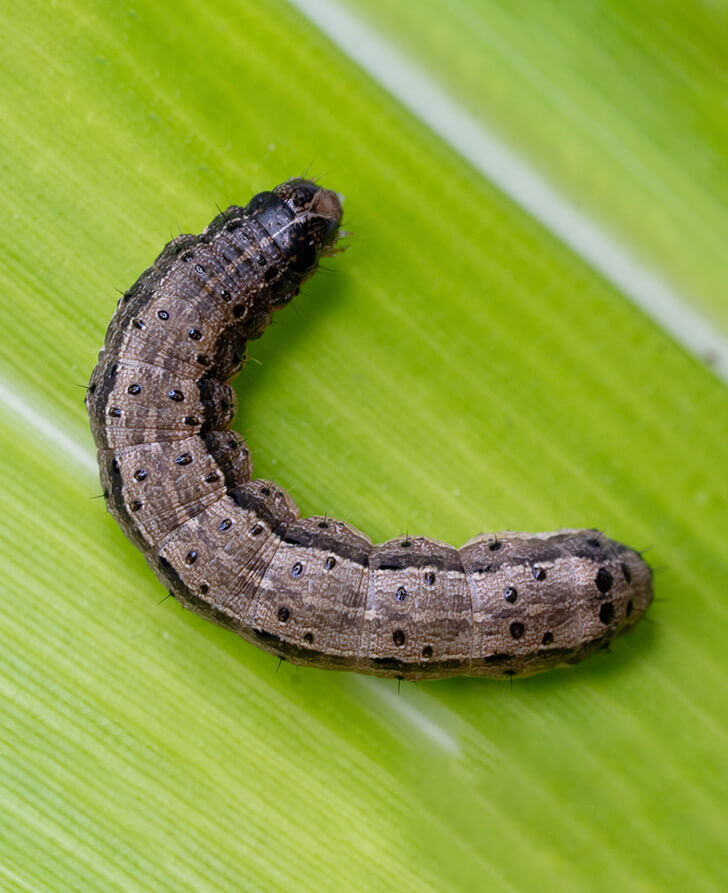
Armyworm larvae vary in color from green to tan brown to black. There are long, light orange, white, and brown stripes that flow below their head capsule to the end of each side of their body. This smooth-skinned larva has a series of brown veins that give it a blotchy look.
Armyworms at the pupal stage remain in the brown shell just beneath the surface of the soil. The armyworm moth approximately measures 1 inch long with a 1 ½ inch wing span and is light brown in color. This pest changes its color as it develops and matures.
Armyworm larvae can appear green, tan, brown, or nearly black, with long light-colored stripes running along each side of their bodies. Their smooth skin and blotchy pattern often help distinguish them from other lawn pests.
Armyworms look very different at each stage. Larvae are caterpillar-like and feed on grass, while pupae stay hidden just below the soil. Adult armyworm moths are light brown, about one inch long, with wider wingspans.
Our Service Areas for Armyworm Removal
Fleming Lawn and Pest Services offers professional armyworm control across many South Florida communities, including Boca Raton, West Palm Beach, Fort Lauderdale, Pompano Beach, and surrounding areas.
Absolutely. Our team provides reliable armyworm removal services throughout Palm Beach County and Broward County and their nearby areas in Florida, with treatments tailored to local lawn conditions and active infestations.
Why Armyworm Life Cycles Lead to Rapid Lawn Damage
Armyworms begin their life cycle when adult females lay clusters of eggs on grass blades or near the base of plants. Within 5 to 10 days, larvae hatch and begin feeding aggressively. These caterpillars are typically light green and highly active at night, feeding on turf and plants, while hiding beneath grass clippings and plant debris during the day.
As larvae grow, they pass through six developmental stages, or instars, over one to two weeks before pupating in the soil. Adult armyworms then emerge and repeat the cycle, with more than three generations occurring each season. This rapid development allows infestations to spread quickly.
Armyworm feeding causes severe damage to lawns and crops. The larvae chew leaf tissue, leaving grass and plants with a skeletonized appearance. As food sources are depleted, armyworms move from plant to plant, stripping leaf margins and causing widespread lawn and landscape damage in a short period of time.
Professional Armyworm Control and Lawn Protection in Florida
When armyworm activity is limited, natural control methods can help reduce their numbers. Predators such as birds may feed on armyworms, and maintaining a well-kept lawn can make turf less inviting for these pests. Proper lawn care help reduce the shelter and food sources that armyworms rely on to survive.
However, armyworm outbreaks require a more proactive approach. Fleming Lawn and Pest Services combines professional lawn maintenance with targeted pest control to address infestations at every stage. While hand-removal and home remedies may provide temporary relief for small infestations, they are rarely effective during widespread outbreaks.
Our team uses professional-grade treatments designed to eliminate active armyworms quickly while protecting turf health. By proper debris management and lawn inspections with proven pest control applications, we help stop ongoing damage and reduce the risk of future infestations. This integrated approach allows us to deliver reliable, long-term armyworm control for Florida lawns. Contact us to schedule an inspection and treatment.
Get Expert Help for Armyworm Control
Seeing signs of armyworm damage? Contact our experts today for professional removal and long-term lawn protection.
Call (561) 260 9411
or contact us online to request your free quote
Concerned About Armyworm Damage?
Request a free, no-obligation lawn inspection and quote.