Understanding Chinch Bugs and Their Impact on Lawns
With several species that exist all over the United States, Chinch bugs are bothersome for lawns and landscapes because they cause exceptional damage to turf grass. They also love to feed on corn, rice and sorghum. Chinch bugs are mostly found on dry and stressed lawns with young plants and grass. They use a sharply pointed mandible to extract the sap and insert a toxic substance that restricts the plant from carrying water.
Chinch bugs are small pests that feed on lawns, turf grass, and crops like corn and rice. They extract sap and inject a toxin that prevents plants from absorbing water, often causing dry, stressed, or dying patches in lawns. We can help identify and manage these pests before serious damage occurs.
Chinch bugs thrive in dry, stressed lawns and areas with young plants or grass. They are widespread across the United States, including Florida, and can quickly harm your landscape if left untreated. Our team provides effective chinch bug control to protect your lawn and plants.
Call (561) 260 9411 or contact us online to request your free quote
Get A QuoteCommon Chinch Bug Species in Florida
Chinch Bug Appearance and Characteristics
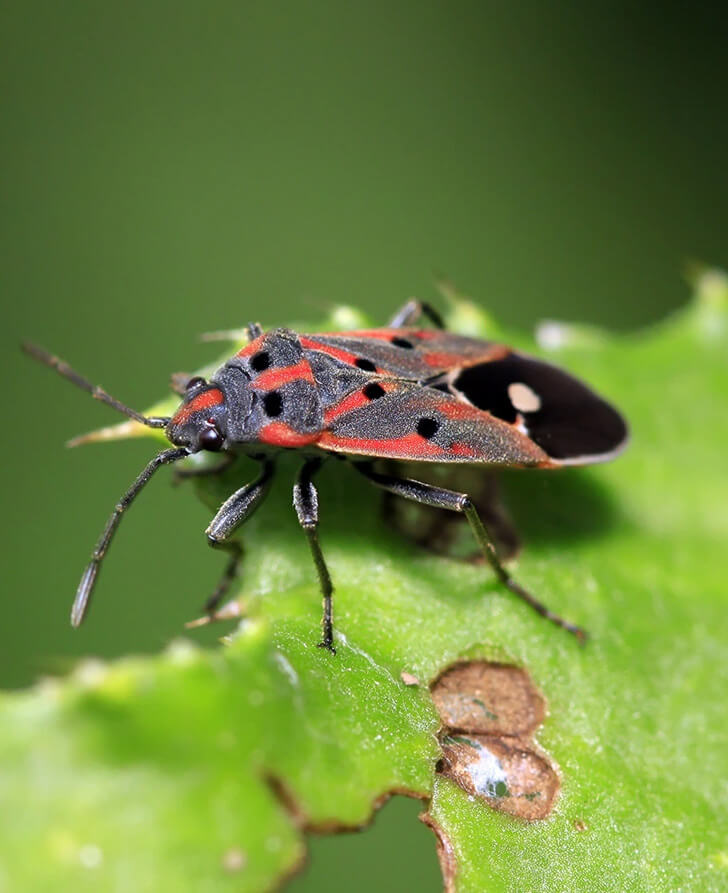
An adult chinch bug measures approximately 1/4 inch long, a black body with fully developed greyish wings with triangular dark patches at the outermost margins. They have an antenna and 3 pairs of legs similar to nymphs.
A nymph is bright red in color with a white band across its back. It slowly changes color from red to black and grows wings as they reach maturity. Bother adults and nymphs release a strong unpleasant odor when they are crushed or when they come in large groups.
Adult chinch bugs are small, about ¼ inch long, with black bodies and greyish wings featuring dark triangular patches. Nymphs are bright red with a white band across their back and gradually turn black as they mature. Both release a strong, unpleasant odor when crushed or in large groups. We can help identify these pests quickly to protect your lawn.
Look for tiny black adults with greyish wings or red nymphs with a white stripe on their back. If you notice patches of dying grass combined with a strong odor when handling these insects, it’s likely a chinch bug infestation. Our team provides professional chinch bug control to keep your lawn healthy.
Where We Offer Chinch Bug Control
Fleming Lawn and Pest Services offers expert chinch bug control across Palm Beach and Broward Counties. We serve Boca Raton, Boynton Beach, Lake Park, Lake Worth, Palm Beach Gardens, West Palm Beach, Fort Lauderdale, Pompano Beach, and many more locations to keep your lawn healthy and pest-free.
Absolutely! Our team provides professional chinch bug removal and pest control services throughout Florida, including Palm Beach, Coral Springs, Riviera Beach, South Bay, Palm Springs, and surrounding areas. We make it easy to protect your lawn from chinch bug damage no matter where you are in the region.
Understanding the Life Cycle of Chinch Bugs and Their Lawn Damage
Adult chinch bugs spend the winter hidden in weeds and grasses, becoming active again in spring. During early summer, they mate, and females deposit eggs on grass leaves or stems. A single female can lay over 500 eggs, which hatch in 1–3 weeks. The wingless nymphs go through five developmental stages before maturing into adults, a process that can take up to a month. Depending on the temperature, a full life cycle may complete in six weeks, and two or more generations can occur each year.
Chinch bug infestations can seriously damage lawns. Signs include yellow or drought-stressed patches, typically appearing during hot, dry months from June to September. These patches usually start at the edges of the lawn and grow larger, even with proper watering. As infected plants die, chinch bugs move to nearby lawns in search of new host plants, spreading the damage across your landscape.
Effective Chinch Bug Control Methods You Can Trust in Florida
Controlling chinch bugs starts with proper lawn care. Regular maintenance, improving soil with quality fertilizer, and keeping your grass well-watered, can help prevent infestations. For areas with moderate chinch bug activity, sprinkling diluted dishwashing liquid or using organic soap can safely dehydrate and reduce the pest population without harming your lawn. These simple steps are part of effective lawn chinch bug control in Florida, helping keep your turf healthy and vibrant.
For heavily infested areas or persistent problems, it’s best to rely on professional chinch bug removal. Fleming Lawn and Pest Services provides expert chinch bug removal services in Palm Beach County and Broward County. Our team ensures thorough treatment, preventing further damage while maintaining a healthy landscape. With our experience in lawn chinch bug control in Florida, we can quickly identify, treat, and prevent chinch bug infestations, keeping your lawn safe year-round.
Protect Your Lawn from Chinch Bugs Today
Don’t let chinch bugs damage your turf! Contact us for expert chinch bug control services in Florida. Our team provides professional chinch bug removal to keep your lawn healthy and pest-free. Request your free, no-obligation quote today!
Call (561) 260 9411
or contact us online to request your free quote
Protect Your Home and Lawn!
Request a complimentary quote now.